
Cargo, Freight and Inland Marine: What’s the Difference?
If your business moves goods, you’ve likely heard the terms cargo, freight and inland marine. Although used interchangeably, they mean different things.
Knowing the differences can help protect your products and equipment at every stage of transit. And you don’t have to be in the transportation business to need protection for the things you move.
What is cargo?
Cargo is goods being transported from one place to another. Retail inventory, raw materials, electronics and food shipments are examples of cargo. Cargo insurance protects the value of these goods against damage, loss or theft while in transit.
While cargo refers specifically to the goods, freight is often used more broadly to describe the goods and the cost of moving them.
What is freight?
Transportation and logistics businesses operate within the freight ecosystem. They face risks beyond the goods themselves, including crashes, liability claims, extreme weather and geopolitical disruptions. Freight refers to the cargo itself and, in many contexts, the cost of transporting it. It’s often used interchangeably with cargo, although freight can also refer to the fees associated with moving those goods.
In some cases, insurance or contracts reimburse prepaid shipping costs if a shipment is disrupted.
What is inland marine?
Inland marine insurance is one of the most common ways businesses insure property that gets moved around. Despite the name, inland marine insurance has little to do with oceans; it’s a land-based extension of ocean marine coverage.
Inland marine insurance covers property that is mobile or moved between locations. This includes goods in transit over land and equipment that travels from jobsite to jobsite, such as:
-
Equipment that moves between locations (e.g., heavy machinery hauled between construction sites)
-
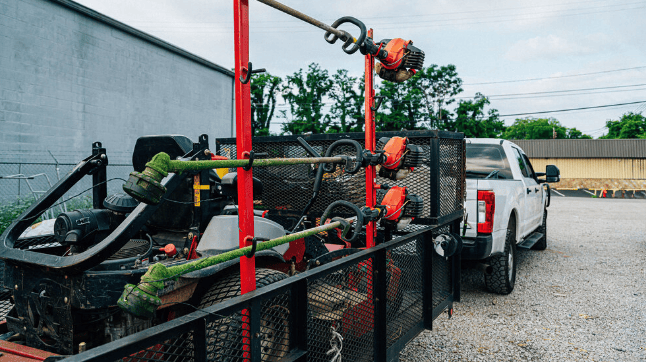
Tools, machinery and installation materials (e.g., a landscaper’s lawn mower and yard tools that they transport between customer locations)
This type of coverage exists because standard commercial property policies typically don’t cover property once it leaves a fixed location. Inland marine fills that gap.
How these coverages work together
Think of cargo, freight and inland marine insurance as layers of the same risk picture. Depending on your daily business operations and the goods involved, you may use all or some of the coverages. For transportation operations, these coverages are the foundation of risk management.
Why these distinctions matter
If you move products, you’re exposed to risk at multiple points in the journey, such as: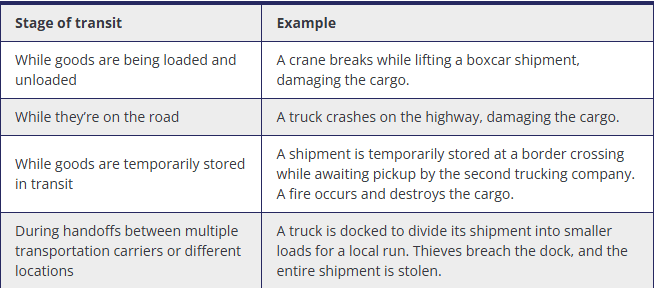
Without the right combination of coverage, a single incident could mean:
-
Paying out of pocket for lost inventory
-
Facing legal costs from third-party claims
-
Disrupting your entire supply chain
Common misconceptions that create coverage gaps
Here are some common mistakes business owners make when insuring the goods and property they’re transporting:
Assuming goods are always covered in transit
Many business owners believe their standard property or commercial auto insurance covers their inventory everywhere. It doesn’t. Once goods leave a fixed location, coverage may stop unless inland marine or cargo coverage applies.
For example, let’s say you have a small landscaping business. You store lawn mowers, leaf blowers, chain saws and other tools in a locked garage. Thieves break into your garage and steal your mowers and tools. Your business property insurance covers the loss.
On the other hand, suppose you load your equipment onto a trailer and tow it to your customer locations. While you’re mowing, someone steals your equipment from your trailer. Since the items were away from your primary business location, your property insurance wouldn’t cover the loss.
That’s where inland marine coverage comes in. It protects your equipment wherever it goes, whether on the road, at jobsites or in temporary storage.
Only considering the worth of the goods, not the operational risks
Cargo coverage protects the value of the shipment. However, it doesn’t address liability from accidents that happen while transporting those goods, damage to someone else’s property or operational risks. Freight operations involve multiple exposures beyond the shipment itself.
Forgetting about liability exposures tied to the goods being shipped
Cargo owners liability insurance is a more specialized coverage. It protects against claims if the goods you transport cause injury, property damage or environmental harm. That’s a different exposure than replacing lost or damaged goods. For example, let’s say one of your trucks gets into an accident while carrying a load of chemicals. Your company is held liable for cleaning the spill. In this scenario, your cargo owners liability insurance would reimburse some of the cost.
Review your coverage with us
A quick coverage check can help uncover gaps. We’re here to help you design coverage that fits your business’s transportation operations from departure to delivery.
This content is for informational purposes only and not for the purpose of providing professional, financial, medical or legal advice. You should contact your licensed professional to obtain advice with respect to any particular issue or problem.
Copyright © 2026 Applied Systems, Inc. All rights reserved.